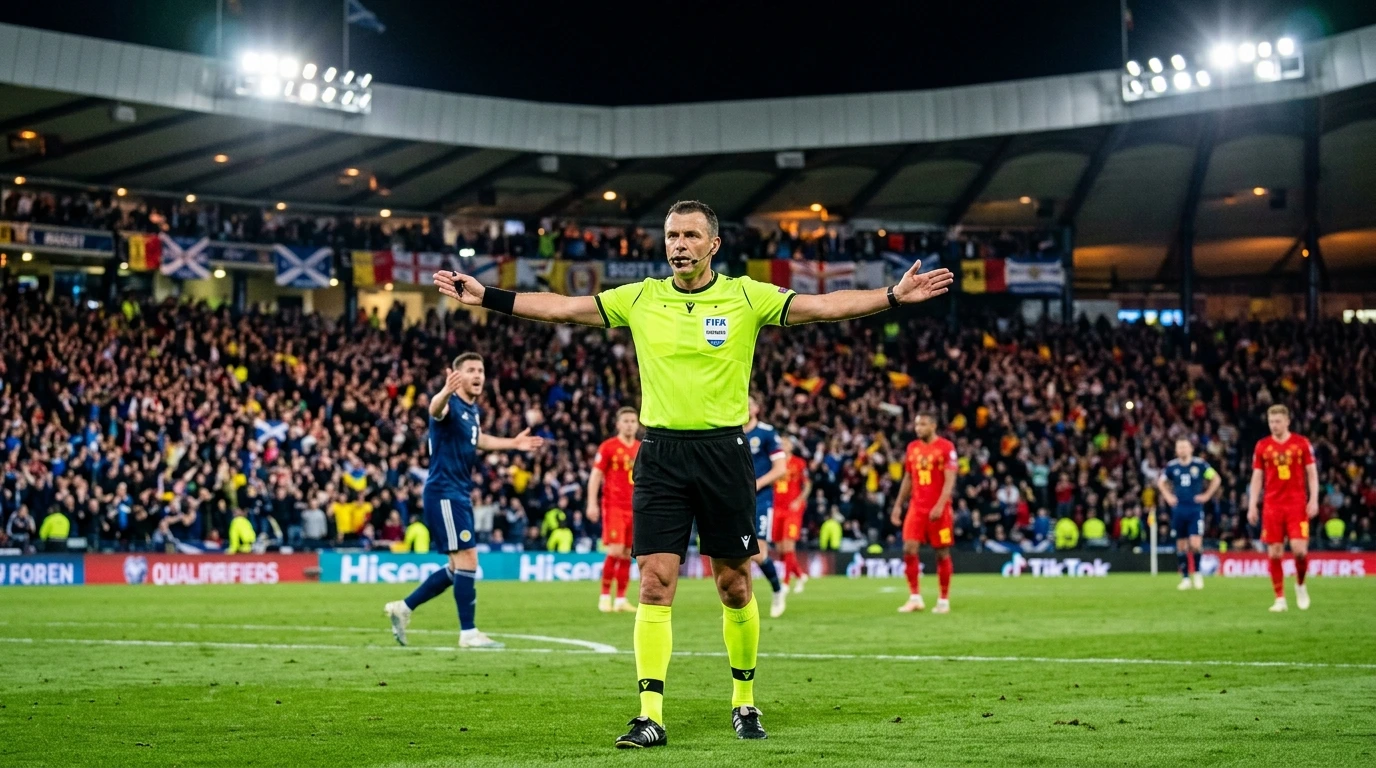
The referee who blows the final whistle at MetLife Stadium on July 19 will have just controlled one of the most scrutinised matches in global sport. For that, they earn somewhere between $3,000 and $10,000 in match fees on top of their base tournament payment.
That number surprises most people. The vast majority of World Cup referees hold day jobs outside football. FIFA does not employ them full time. It selects them, flies them in, pays a flat fee plus match bonuses, and sends them home.
Here is the complete picture of what FIFA pays its World Cup officials, how the payment structure works, and how those figures compare to what referees earn in domestic leagues.
The Basic Payment Structure
FIFA pays World Cup referees through a two-part system: a flat base payment for the entire tournament plus a per-match bonus for every game they officiate.
Based on confirmed figures from the 2022 Qatar World Cup and industry sources, the structure looks like this:
| Role | Base tournament payment | Per match bonus |
| Main referee | $70,000 | $3,000 per match |
| Assistant referee | $25,000 | $2,000 per match |
| Fourth official | $25,000 | $2,000 per match |
| VAR referee | $25,000 | $2,000 per match |
A main referee who officiates seven matches across the tournament, including the final, could earn close to $91,000 in total from those payments alone. A referee who handles the final and nothing else receives the $70,000 base plus a single $3,000 match bonus.
FIFA has not yet officially confirmed the exact 2026 figures. The 2022 structure above is the most recently verified and industry analysts expect a modest increase given the expanded 48-team format and the overall growth in FIFA’s financial distributions for 2026.
Who These Referees Actually Are
This is the part that surprises football fans most. The referees selected for the World Cup are not professional officials in the traditional sense. FIFA does not employ them on year-round contracts. They are elite amateur or semi-professional referees who earn their living primarily through domestic league appointments, often in the top flight of their national leagues, while FIFA selects them for international duty based on performance assessments.
Most top-level referees in Europe hold separate careers alongside their officiating roles. Premier League referees are an exception, operating as full-time professionals on contracts with the Professional Game Match Officials Limited. But a referee from an African, Asian, or South American federation attending the World Cup is, in the majority of cases, doing so as a recognised expert who earns the bulk of their income elsewhere.
FIFA selects referees for the World Cup through its Referees Committee, drawing from the FIFA International List, which is populated based on nominations from each confederation. Those referees spend years working up through their domestic leagues, earning confederation recommendations, attending FIFA fitness and assessment camps, and waiting for an appointment that may come once in a career.
The 2026 tournament has selected 45 referees, 45 assistant referees, and 24 video match officials across all officiating categories.
How 2026 Pay Compares to Domestic Leagues
The $70,000 base payment is substantial for most of the world’s referees. But it is worth contextualising against what top domestic league officials earn in the highest-paying competitions.
| League / Competition | Referee annual earnings (approx) |
| English Premier League | $70,000 to $300,000 per year |
| UEFA Champions League final | $10,000 to $15,000 per match |
| Bundesliga | $5,000 per match |
| MLS (USA) | $55,000 per year, $565 to $875 per match |
| FIFA World Cup base | $70,000 flat fee per tournament |
A Premier League referee on a full-time contract earns more annually than a World Cup base payment. For that official, the World Cup is prestigious rather than financially transformational.
For a referee from Nigeria, Colombia, or Japan, where domestic match fees are a fraction of those in European leagues, the $70,000 base fee is genuinely significant. It can represent multiple years of domestic earnings compressed into a single summer appointment.
The VAR system introduced at the 2018 World Cup added new payment categories for video officials. In the Bundesliga, a VAR referee earns between $1,000 and $3,000 per game. At the World Cup, those officials receive the same $25,000 base structure as assistant referees.
What Else Referees Receive Beyond the Cheque
The financial package goes beyond the base and match fees. FIFA covers all travel and accommodation for the duration of the tournament. Officials receive daily allowances to cover meals and incidentals. They receive a full kit allocation from Adidas, the official supplier, including boots, training wear, and the official match jersey.
At Qatar 2022, referees famously received a $5,000 Hublot watch as part of FIFA’s official timekeeper partnership. Whether the 2026 edition includes a comparable gift from an official partner has not been confirmed, but the precedent is established.
Referees also receive a commemorative medal for officiating the final, one of the most coveted non-financial pieces of recognition in football officiation. For many referees, appointment to the final is the crowning achievement of a career that may span 20 or 30 years of amateur, semi-professional, and international work.
The VAR Era and What It Means for Officiating Pay
The introduction of VAR changed the economics of World Cup officiating in a meaningful way. Where previous tournaments required a referee and two or three assistants, the modern setup includes a full video review team operating from a centralised hub.
Each 2026 match will involve the on-pitch crew of four officials plus video officials reviewing decisions in real time. That is a larger total team per match, more officials drawing per-match bonuses, and a higher total officiating payroll for the tournament overall.
Every major decision at an $871 million prize pool tournament carries enormous scrutiny. A penalty awarded in the final or a goal disallowed in a semifinal affects not just the result but potentially tens of millions in prize money.
How Referee Pay Compares to Player Pay
The contrast between what referees earn and what players earn at the World Cup puts the officiating payment structure in stark relief.
A winning player receives approximately $400,000 as their share of the prize money. The referee who officiates the final receives $70,000 plus a $3,000 match fee, totalling $73,000 for the tournament if they only handle that one game. For a referee who oversees eight matches including the final, the total reaches around $94,000.
The best-paid player at the tournament, Kylian Mbappe on an estimated $1.38 million per week at Real Madrid, earns more in a single day than the referee of the final earns from the entire tournament.
That disparity reflects the broader economics of football, where player commercial value drives compensation far above what any official can command. It also reflects the structure of FIFA’s officiating programme, which is built around amateur and semi-professional excellence rather than the full-time professional model that defines player careers at this level.
FAQ
How much does a World Cup referee earn? Based on the 2022 Qatar structure, main referees receive a $70,000 base payment for the tournament plus $3,000 per match officiated. A referee handling seven matches could earn close to $91,000 in total. FIFA has not confirmed whether 2026 figures differ.
Are World Cup referees professional? Not in most cases. The majority hold domestic league appointments alongside other careers. Premier League referees are a notable exception as full-time professionals, but most World Cup officials are elite amateurs or semi-professionals selected on merit.
Do assistant referees earn the same as main referees? No. Assistant referees receive a $25,000 base payment and $2,000 per match, significantly less than the $70,000 base for the main official.
What other benefits do World Cup referees receive? Travel, accommodation, daily allowances, a full Adidas kit allocation, and at the 2022 tournament a $5,000 Hublot watch from FIFA’s official timekeeper partner. Final referees receive a commemorative medal.
How does World Cup referee pay compare to club referee pay? A Premier League referee can earn between $70,000 and $300,000 annually. For referees from leagues with lower match fees, the World Cup base payment represents a significant sum relative to their domestic earnings.
How many referees are at the 2026 World Cup? FIFA selected 45 main referees, 45 assistant referees, and 24 video match officials for the 2026 tournament.
Payment figures based on confirmed 2022 Qatar World Cup structure and industry sources. FIFA has not officially confirmed 2026 referee pay rates as of May 2026. Domestic league salary data from REFSIX, uhlsport, and refrsports analysis. This article will be updated when FIFA confirms official 2026 officiating remuneration.
Launch Your Readymade Template Business
2,500+ Canva templates across 30 local business niches. Ready to sell. No design skills needed.
Restaurants, Roofers, Salons & 27 more niches
